Norfolk, VA
Concrete removal and replacement
Concrete that has cracked through, settled, heaved or spalled past the point of patching has to come out before anything new goes down. The part that matters is what happens between the removal and the repour.
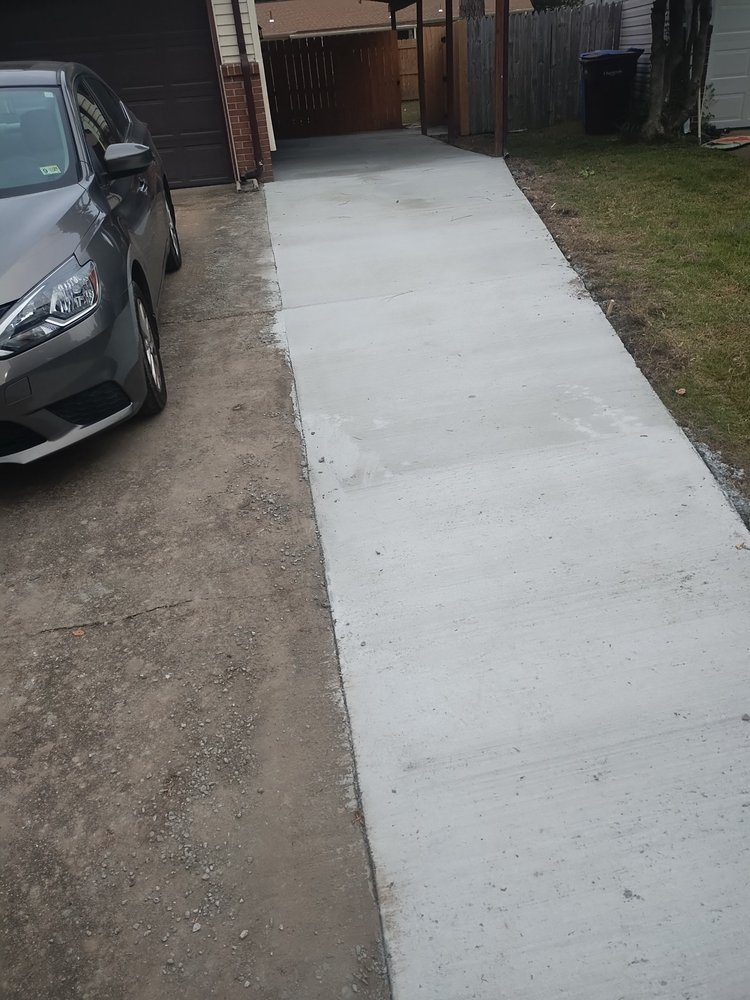
Finding out why it failed
Most failed flatwork failed because of what was underneath it rather than what was in it, and the rest usually comes down to jointing, thickness or how it was finished and cured. A slab bridging a soft spot cracks at the soft spot. A section that settled did so because the ground under it moved or was never compacted. A driveway that broke up under a truck was too thin for the load it got.
That matters because the failure mode decides the repair. Pouring a new slab onto the ground that failed the old one produces the same result on a delay, and it is the most common way a replacement turns into a second replacement.
Root intrusion is the other frequent cause around here, particularly on walks and drives near mature trees. Where roots are the cause, taking the concrete out and putting it back without addressing the root path is a short term answer, and it is worth being clear about that rather than quietly repeating it.
Removal
Removal starts with a saw cut to a clean line, at an existing joint where there is one. Breaking to a ragged edge leaves a weak, irregular joint that the new work has to key into, and it usually means the repair starts failing at its own boundary.
Breakout and haul off follow. On a site with limited access, how the broken material gets out is a real constraint on the schedule and it gets settled before the work starts rather than discovered mid job.
Where the concrete coming out sits against something that has to stay, whether that is a foundation, a pool shell, an existing walk or a neighboring slab, the removal is careful work and the thing being protected is the thing that is staying.
Correcting the base
With the concrete out, the ground is open and that is the moment to fix what caused the problem. Soft or unsuitable material comes out, the base gets rebuilt and compacted to the depth the job needs, and where groundwater is the issue the correction is more excavation and more stone rather than the same detail placed faster.
This is the step that gets skipped on a cheap replacement, and it is invisible the day the job finishes. Two replacement quotes for the same driveway can differ by a third entirely on what happens in this step, and the difference does not show for a couple of years.
The repour
The new work gets tied to the existing at the right elevation on every edge, so there is no lip to trip on and no place where water collects at the seam. Isolation joints go where the new concrete meets a structure or a slab that moves independently.
Thickness and reinforcement get set for the load the slab will actually take rather than copied from whatever was there before. If the old slab failed because it was too thin for what drives on it, rebuilding it to the same thickness is rebuilding the same failure.
Color will not match the surrounding concrete. New concrete cures to a shade set by the mix, the weather that week and time, and a replacement panel reads as newer than what is around it. It evens out somewhat over the first year and never becomes identical, and that is worth saying before the pour rather than after it.
Questions
Common questions
Does cracked concrete always need replacing?
No. It depends on what caused the cracking. Fine surface cracking from shrinkage is cosmetic. A slab that has broken because the base under it failed is a different problem, and patching the surface there buys a short time at best.
Do you handle removal and haul off?
Yes. Sawcutting to a clean line, breakout and getting the material off site are part of a replacement scope. On a tight site, how the broken material gets out is worth settling before the work starts.
Will the new concrete match the old?
Not exactly. New concrete cures to a shade set by the mix, the weather that week and time, so a replacement panel reads as newer than what surrounds it. It evens out somewhat over the first year without ever becoming identical.
Why did my concrete fail in the first place?
Usually what was underneath it, though jointing, thickness for the load and how it was cured account for a good share too. A slab bridging a soft spot cracks at that spot, and one that settled did so because the ground moved or was never properly compacted. Root intrusion is the other common cause.
Can you replace concrete next to a pool or a foundation?
Yes. Removal next to something that has to stay is careful work, and the structure being protected sets the pace. The joint between the new work and whatever it meets gets rebuilt properly rather than filled solid.
Is replacement more expensive than repair?
Up front, yes. Over the life of the work it depends entirely on whether the cause is fixed. A repair that leaves a failed base in the ground is money spent on a delay, and that is worth weighing honestly before choosing.
Tell us what you are looking at
Call, or send it through the form with the location. Either reaches the same person.